When recommending a power wheelchair for your patient, there are many considerations that go into the decision. What base will work best for their environment and performance needs? What features are required for them to be the safest and most functional? What are their goals, priorities, and positioning needs? What electronics are going to be the best match for them?
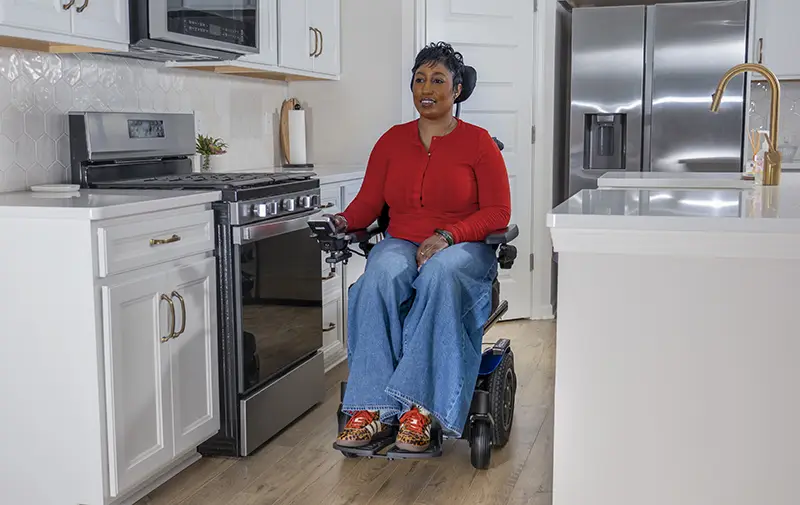
The QUICKIE Q300 M Mini continues to set the standard for compact power wheelchair performance as the narrowest TRUE mid-wheel drive QUICKIE power wheelchair, featuring an ultra-tight 17" turning radius for exceptional maneuverability in the smallest spaces. Now, through our partnership with Dynamic Controls, the Q300 M Mini is available with optional LiNX electronics – delivering advanced programming, intuitive controls, and expanded compatibility with alternative drive solutions. The result is a highly maneuverable base paired with industry-leading electronics, giving providers and end-users even more flexibility, performance, and confidence in every environment.
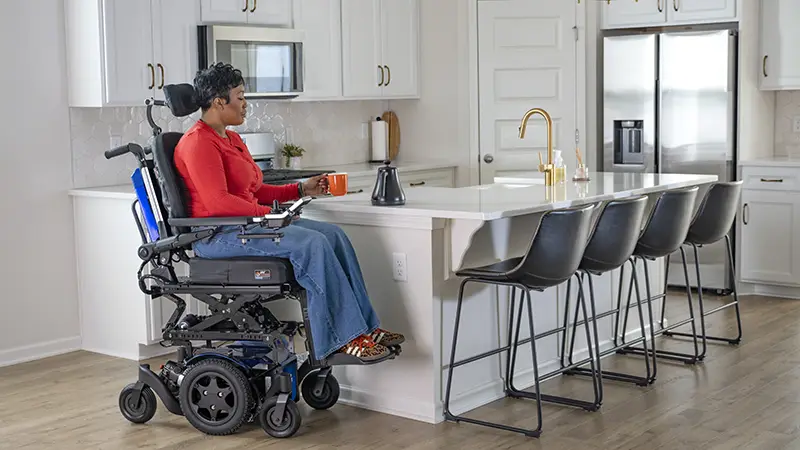
As a platform, LiNX is designed with both the clinician and the end-user in mind – streamlining setup, simplifying programming, and enabling a higher level of personalization without added complexity. In a setting where time, efficiency, and clinical precision matter, learning a new electronics system must deliver clear value. Here's where LiNX stops being just another electronics platform and starts becoming a clinical advantage:
Wireless Programming
Wireless programming is efficient, easy, and fast in the clinic or in the field. With LiNX, you simply plug in the pocket-sized Linx Access Key (LAK), connect to the iOS LiNX Access App through Bluetooth, and you are ready to fine-tune many key parameters like speed, acceleration, deceleration, and joystick throw in real time. This allows you to make needed adjustments while the end-user is driving so the changes are experienced immediately. No need to have your patient stop their chair, power cycle, and see if the new parameters are an improvement. They get to feel the changes quickly and without disruption, maximizing everyone's time.
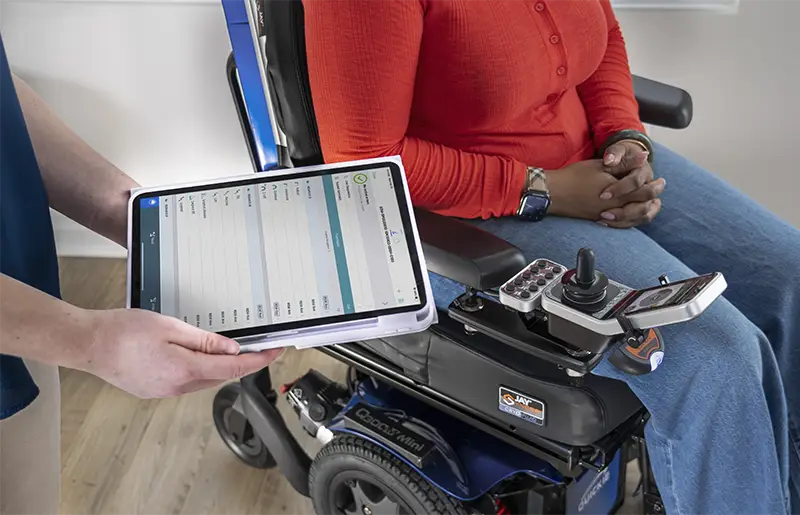
In addition, intuitive interaction with the programming app as an interface means that customizing the profiles and functions for the end-user is easier than ever. Changes are made using familiar gestures like swiping, dragging, and tapping recognizable symbols, reducing intimidation and questions with programming.
LiNX SitSmarter
LiNX SitSmarter is a collection of advanced memory seating features, available across the entire LiNX control system range. Whether the seating system uses one actuator or eight, and whether the client operates through a joystick, switch, or any compatible input device, SitSmarter adapts seamlessly.
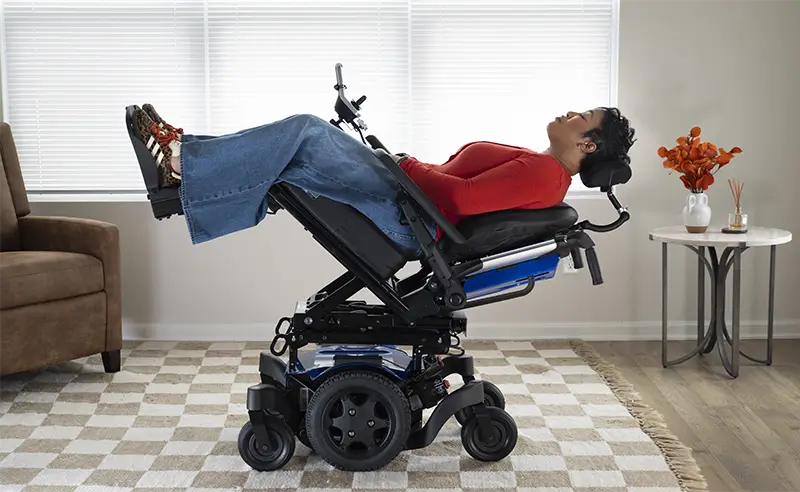
From a clinical perspective, saved positions can be locked when the angles are crucial for outcomes and they can be clearly named so the end-user can identify and use the position repeatably, with confidence. The actuators move in sequence to reduce shear and assist with maintaining postural alignment with multiple power seat functions. And the actuator sequence is individually programmable, too.
Conversely, for the savvy and more independent end-user who may want or need the ability to fine-tune their comfort or functional positions outside of the clinic, the provider can choose to keep some memory positions unlocked so they can be modified through the user menu. Additionally, the angles are shown on the display for easy identification.
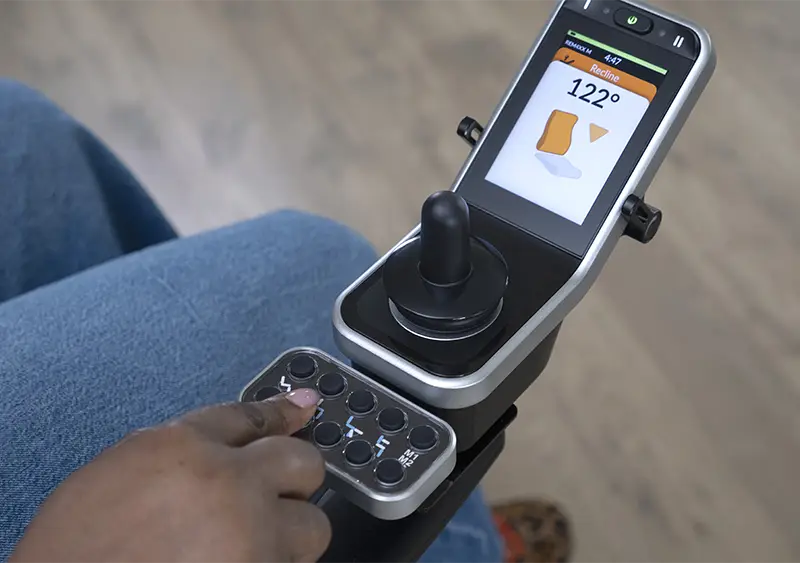
To make SitSmarter even more versatile, it is available through all drive inputs and the 10-way switch so it is accessible to nearly every end-user. For additional information about LiNX and SitSmarter, read this guide.
Customization
Customization of how the end-user interacts with their chair through LiNX is virtually unlimited, which means the system can be adapted to work for the client rather than the client having to adapt to it. This through thoughtful design of programmable buttons and full flexibility of menu setup and accessibility methods (swipe, tap, joystick, or menu scan). Both proportional and switched inputs can be utilized as quadrants to control seat functions, maximizing versatility and efficiency of interaction and control. From a basic system for those who need simplicity, to full accessibility for the most complex end-user, LiNX can be individually tailored for success.
Troubleshooting
When it comes to servicing and problem-solving, with the LAK and LiNX Access App, providers can troubleshoot confidently. Current and past error codes are stored in the app and can be viewed with descriptions to take the guesswork out of diagnosing system issues. To simplify the service experience, real-time battery, joystick, and motor performance information is displayed in the app and available without needing a voltmeter. The chair log and system summary provide additional valuable information as you work to help your customer and understand the issues at hand, including battery usage and charging history.
Sunrise Medical Support
Support from Sunrise Medical is available to you. You can request in-person training from our Technical or Clinical Educators and local Account Managers, or access resources in the Technician Support Center. Our partnership with Dynamic Controls means that we continue to pursue the best outcomes for providers and end-users alike.
In summary, by streamlining setup and expanding customization, LiNX delivers meaningful clinical advantages. It empowers therapists with technology that adapts to each patient's needs while simplifying the process. The result is an experience that elevates both clinical practice and patient outcomes.
Christy Natale, DPT, ATP/SMS, has a dual background in the rehabilitation industry, starting her career as a pediatric Physical Therapist before transitioning to the role of Assistive Technology Professional for a supplier where she worked with a variety of ages and diagnoses. She earned her Doctorate in Physical Therapy from Pacific University in 2009 and has a combined 15 years of experience providing customized seating, positioning, and mobility solutions tailored to the needs and goals of her clients. Her specialties include pediatric positioning and mobility, alternative drive controls, power wheelchair programming, and sleep positioning in the scope of 24-hour postural care.