Wheelchair cushion covers may seem like a simple accessory, but they play a crucial role in skin protection and overall comfort. While many people assume a cover's only job is to keep the cushion clean, the type of cover used can significantly influence pressure distribution, moisture control, and heat management – all key factors in maintaining healthy skin.
When a manufacturer designs a wheelchair cushion, the cover is integral to the design of the overall cushion. The design and materials used in the cushion cover work in conjunction with the design and materials of the cushion to help achieve seating goals. Covers have similar properties as cushions and are often chosen for a client for a specific reason. That's why a cushion cover should not be "swapped" for a cover from a different cushion when one cover is being laundered. It is also the reason why clients should not sit on a cushion without any cover. Sitting on a cushion without a cover will not only decrease the overall integrity of the cushion and change the way a cushion performs, but can also change the desired properties of the overall cushion, such as pressure distribution or microclimate.
Depending on the goals and needs of the user, the properties of the cover can play an important role in how the overall cushion will perform. There are many different types of cushion covers. Some cushions only have one cover, while others have two that are meant to work best when they are used together.
In addition to helping keep the cushion underneath clean, the cushion cover can have an impact on skin protection for a person by affecting the amount of air exchange that occurs at the seated surface.3 The cushion cover can also affect the temperature and the amount of moisture at the seated surface. Heat and moisture are two extrinsic factors associated with pressure injury. In addition, cushion cover construction affects pressure distribution at the seated surface, as materials and design features allow for sufficient immersion to promote improved load redistribution and mitigate the hammock effects.2 These design features include not only material composition, but also the overall sewing and fabrication of the cushion cover. Finally, with respect to skin protection is the degree to which the material of the cover can affect shearing forces.1 Shearing is an extrinsic factor associated with pressure injury and can occur when an individual's body tissues move relative to the support surfaces of the seating system.5
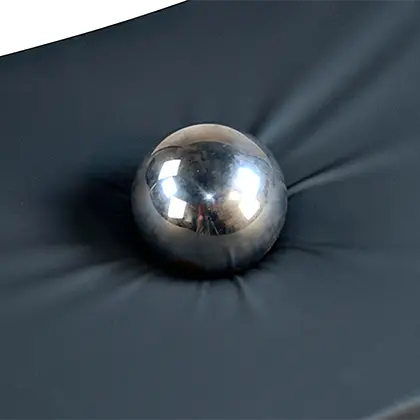 Hammocking effect
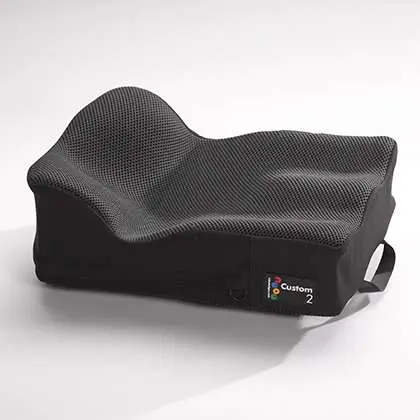 Well sewn cover
Sunrise Medical Cushion Cover Technology
Microclimatic Covers
A microclimatic cover facilitates the transfer of heat and moisture away from the body, often with the use of mesh spacer fabric incorporated into the cover. So, how can a cushion cover help with air exchange, heat, and moisture dissipation? Some cushion covers, such as those on the JAY Ion, are designed with a layer of open-cell, reticulated foam sewn into the interior of the cover. The open cells of this layer of foam allow for air exchange and the ability to wick away heat and moisture. In addition, the layer of reticulated foam provides comfort for the client when sitting on the cushion. This is an example of the manufacturer considering the design of the cushion cover in conjunction with the underlying cushion. In the JAY Signature Series cushions such as the Fusion or Zip, JAY also uses 3DX spacer technology to promote skin protection. Similarly, Ride Designs uses spacer mesh fabric in their covers to promote airflow.
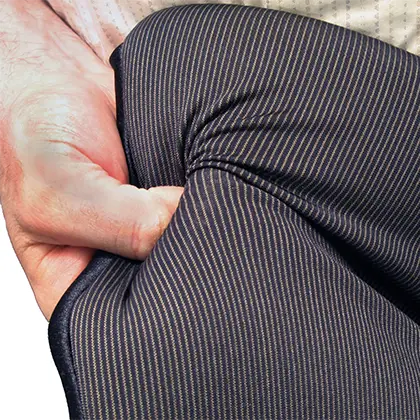 3DX spacer fabric
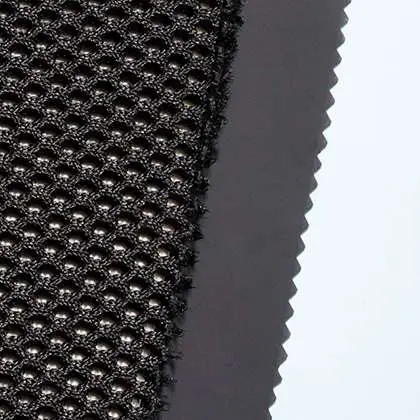 Accusoft spacer mesh
Moisture-Resistant Covers
Moisture-resistant covers serve to protect the cushion underneath the cover by providing a barrier to prevent any liquid from seeping into the material below. Maceration (softening and breaking down) of the skin results from prolonged exposure to moisture. Thus, a moisture-resistant cover protects the cushion and the client. On JAY Signature Series cushions such as the Fusion, the water-resistant inner cover is easy to clean and includes anti-wicking seam thread and a water-resistant zipper for foam protection.
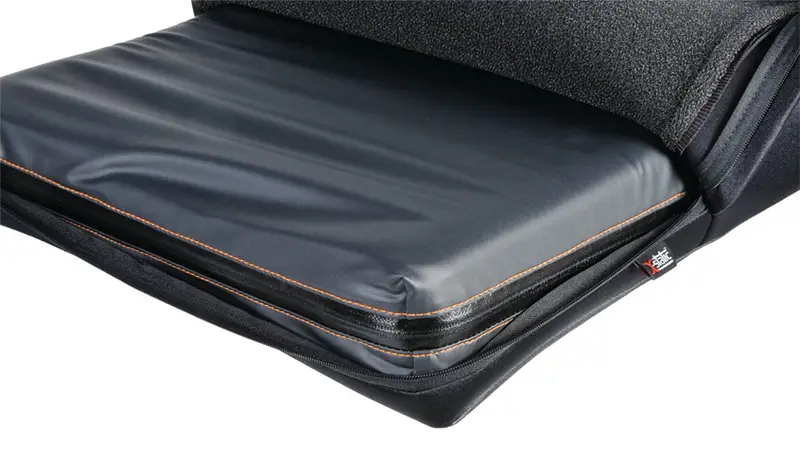 Incontinent inner cover
Stretch Covers
A stretch cover can be considered a general use cover. A stretch cover allows for four-way stretch, which facilitates immersion into and envelopment by the cushion material. If the material under the wheelchair cushion cover can be washed easily (such as with closed cell foam or fluid packs) and if there is only infrequent or occasional incontinence, consider the possibility of opting for a stretch cover (with a replacement cover for use during laundering of the first cover) rather than an incontinent cover.
JAY Signature Series stretch outer covers are made from a material that is impregnated with silver ions. They are machine-washable stretch outer covers and utilize naturally anti-microbial, silver-impregnated Ionic+™ fiber. Silver is non-toxic and acts as an anti-microbial within the fabric to eliminate bacteria and odors. The material is four-way stretch and allows immersion and envelopment to occur with the cushion, addressing skin protection issues through material design.
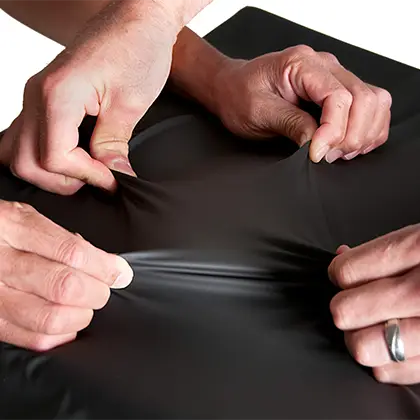 4-way stretch cover
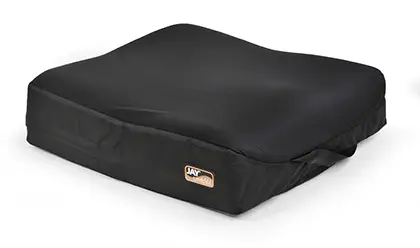 JAY Union cushion
Wipeable Covers
A wipeable cover is also available. The material is a polyurethane fabric that is resistant to moisture and fluids, yet still has four-way stretch. Again, the stretch permits immersion into the cushion material. In the Syncra Seating line, premium leatherette is an option for the cushions and backrests when skin protection may not be your main goal.
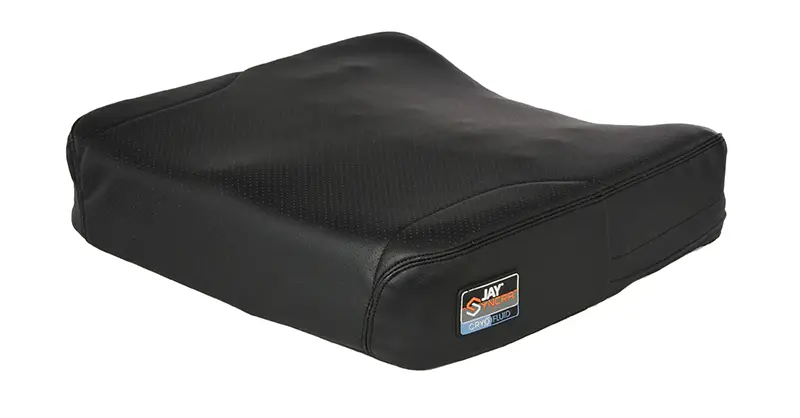 Leatherette Syncra cushion
Wheelchair cushion covers do more than just help to keep the cushion underneath clean. Cushion covers are an integral part of the product design of a wheelchair cushion. Cushion covers can have an effect on skin protection through their ability to allow air exchange, heat & moisture dissipation, immersion & envelopment, and to minimize shear forces. A cushion cover designed to work with a cushion should never be substituted, secondary to changing the properties of the cushion. Using the appropriate cover as intended is essential to ensure the cushion performs safely and effectively for the user.
References
- Consortium for Spinal Cord Medicine (2014). Pressure Ulcer Prevention and Treatment Following Injury: A Clinical Practice Guideline for Health-Care Providers 2nd ed. Paralyzed Veterans of America. Retrieved from www.pva.org
- Iizaka, S., Nakagami, G., Urasaki, M., & Sanada, H. (2009). Influence of the "hammock effect" in wheelchair cushion cover on mechanical loading over the ischial tuberosity in an artificial buttocks model. Journal of Tissue Viability, 18, 47-54.
- Kurfuerst, S. & Chew, F. (2003). Cushion Conclusions. Rehab Management, 16 (7), 52-56.
- Lange, M.L., & Minkel, J.L. (Eds.). (2024). Seating and Wheeled Mobility: A Clinical Resource Guide (2nd ed.). Routledge. https://doi.org/10.4324/9781003526377
- Lange, M. L. (2022, February 15). Does dynamic seating increase shear? Seating Dynamics. https://www.seatingdynamics.com/2022/02/15/does-dynamic-seating-increase-shear/
- Sonenblum SE, McDonald A, Maurer CL, Bass A, Watson M, Zellner H. Reducing pressure with the goal of improving outcomes: a retrospective chart review of cushion evaluations and recommendations at one seating clinic. Disabil Rehabil Assist Technol. 2024 May;19(4):1552-1560. doi: 10.1080/17483107.2023.2212012. Epub 2023 May 12. PMID: 37177785.
- Sprigle S, Deshpande Y. Procedure to categorize wheelchair cushion performance using compliant buttock models. Front Bioeng Biotechnol. 2022 Sep 30;10:1006767. doi: 10.3389/fbioe.2022.1006767. PMID: 36246384; PMCID: PMC9561098.
Lindsey Veety
PT, DPT, ATP/SMS - Clinical Education Manager, US Northeast